
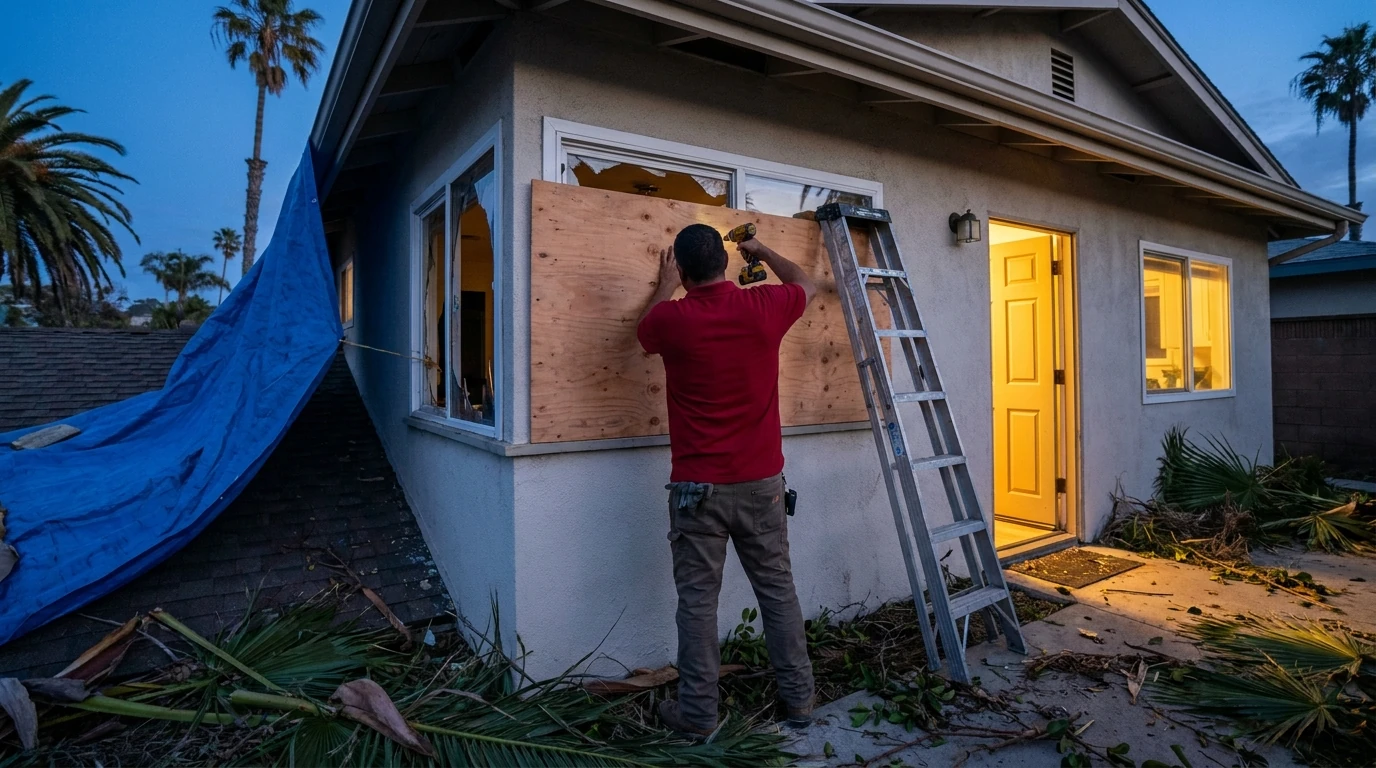
TL;DR: Storm damage restoration in Ventura, CA typically ranges from $300 to $1,500 for emergency board-up and tarping, $1,500 to $6,000 for wind-driven rain extraction and drying in one or two rooms, and $8,000 to $30,000+ when floodwater or mud intrusion contaminates the structure and requires demolition and rebuild. The biggest cost driver isn’t the storm itself, it’s how long water sat before extraction started and whether the water was clean rain or contaminated runoff.
If a winter system off the Pacific just drove rain through a cracked roof tile or blown-out window on the Avenue or in Midtown Ventura, you’re probably staring at a wet ceiling and a mental math problem: is this a $400 fix or a $20,000 one? The honest answer depends on three things: how much water got in, how long it sat, and what kind of water it was. Here’s how restoration companies actually price it.
How much does storm damage restoration cost in Ventura, CA?
Most storm damage jobs in Ventura fall into one of three cost tiers: stabilization only, mitigation (extraction and drying), or full reconstruction after contamination or structural damage. Planning ranges below reflect typical industry pricing for Southern California coastal markets, not a quote for any specific job.
| Scope | Typical planning range |
|---|---|
| Emergency board-up (broken window, damaged door) | $300 - $800 |
| Roof tarping (standard residential roof) | $400 - $1,500 |
| Wind-driven rain extraction, single room, clean water | $1,200 - $3,000 |
| Multi-room extraction and structural drying (3-5 days of equipment) | $3,000 - $8,000 |
| Category 3 floodwater or mud intrusion extraction and decontamination | $5,000 - $15,000 |
| Reconstruction (drywall, flooring, insulation after demo) | $8,000 - $30,000+ |
These are planning ranges, not estimates. Every property is different, and a written scope after an on-site assessment is the only reliable number.
What actually drives the final number?
The cost swings on contamination category, square footage affected, response time, and whether code upgrades are triggered during rebuild, more than on the storm’s severity. A fast-moving squall that floods a hallway for an hour costs far less to fix than a slow leak that sits for three days behind a wall.
Category of water matters most. Wind-driven rain that enters through a roof or window before touching soil is generally Category 1 or 2, clean or lightly contaminated. Water that enters at ground level, carries yard runoff, or backs up from a storm drain is Category 3, also called black water, per the IICRC S500 standard. Category 3 jobs cost more because contaminated materials like carpet pad, baseboards, and drywall below the waterline usually get removed and replaced rather than dried in place.
Response time compounds everything. Drywall and flooring that sit wet for 24 to 48 hours start growing mold, which turns a drying job into a remediation job. See our storm damage insurance claim checklist for what to document before and during extraction.
Square footage and ceiling height change equipment counts. A single bedroom might need two air movers and a dehumidifier running three days. An open-concept living area with vaulted ceilings needs more units running longer, and that’s billed by equipment-day, not by the room.
Mud and debris intrusion adds labor hours. Ventura’s hillside and canyon-adjacent properties, especially near Ojai and the Santa Paula foothills, can see storm runoff carry sediment and debris into garages and lower floors. Mud removal is slower and dirtier than clean water extraction, and materials coated in sediment typically can’t be dried and saved.
Does homeowners insurance cover storm damage in California?
Most California homeowners policies cover wind-driven rain that enters through storm-created openings, like a roof breach or a blown window, as sudden and accidental damage. They generally exclude damage from flooding or groundwater, which is a separate peril covered only by flood insurance through the National Flood Insurance Program.
This distinction catches people off guard every storm season. If wind rips off roof tiles and rain pours through the hole, that’s typically a covered peril under your dwelling policy. If a storm drain backs up and water rises through your foundation or slab, that’s flood, and standard homeowners policies almost universally exclude it. The California Department of Insurance publishes consumer guides on exactly where that line falls, and it’s worth reading before you assume either way.
The practical move: document how the water entered before cleanup starts. Photograph the roof breach or window failure, not just the puddle. That photo is often the difference between an approved wind claim and a denied flood claim.
What happens during a storm damage restoration job?
A typical job moves through four phases: stabilization, extraction and drying, contamination assessment, and reconstruction, usually completed in that order within one to two weeks for a moderate loss.
- Stabilization. Tarping a roof or boarding a window stops additional water from entering. This happens first, often before an insurance adjuster has even been scheduled, because every hour of delay adds water damage.
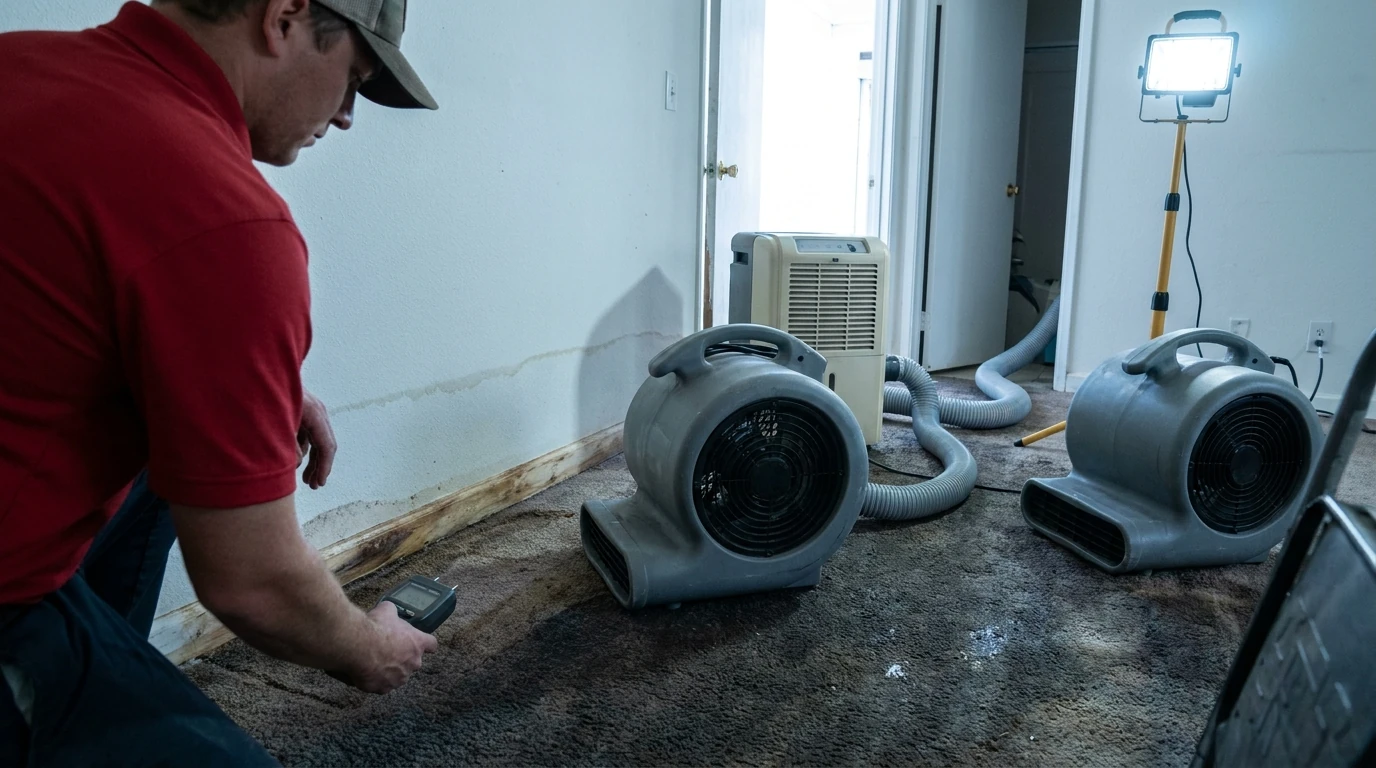
- Extraction and drying. Standing water is pumped or extracted, then air movers and dehumidifiers run until moisture readings in the wall cavities and subfloor return to a dry standard, typically 3 to 5 days.
- Contamination assessment. Technicians check whether the water carried sediment, sewage backup, or prolonged dwell time that pushes the job into Category 3 territory, which changes what materials get saved versus demoed.
- Reconstruction. Drywall, insulation, flooring, and trim go back once the structure reads dry. This is where code-required upgrades, like updated insulation R-values, sometimes add cost beyond the original damage.
If you’re facing storm damage right now in Ventura, Oxnard, Camarillo, or the surrounding county, Ventura County Office of Emergency Services is the place to check for active storm advisories and road closures before you drive anywhere near flood-prone areas.
What should you do next?
Get a written scope of work before any demolition starts, and don’t let anyone remove materials without photographing them first for the claim file. A verbal estimate over the phone isn’t enough to negotiate with an adjuster, and materials removed without documentation are hard to claim after the fact.
If water has been sitting more than a few hours or you’re not sure whether what came in was clean rain or contaminated runoff, that’s the point to call a restoration company rather than a handyman. Call California Restoration West at (805) 290-7292 for an on-site assessment; they’ll document the category of water, scope the drying plan, and work directly with your adjuster on what’s covered.
Storm damage math gets complicated fast once mud, mold risk, or structural drying enter the picture. A same-day assessment that puts real numbers on your specific property beats any planning range on this page.
About California Restoration West
California Restoration West is an IICRC Certified Firm serving Ventura, CA and surrounding Ventura County since 2025, with technicians holding WRT, AMRT, and ASD certifications for water, mold, and structural drying work. The company is licensed and insured and operates 24/7 for storm and water damage calls. This post was prepared with the California Restoration West team, drawing on IICRC S500 drying standards and California insurance guidance.