TL;DR: Storm and wind damage restoration covers emergency tarping and board-up, moisture mitigation for any rain intrusion, structural drying, and repair of roofing, siding, fencing, and interior damage caused by high winds. Most homeowners and commercial property policies cover sudden wind damage, but the claim depends on fast documentation and a temporary repair done before more rain gets in. In Camarillo, the biggest risk after a Santa Ana wind event isn’t the broken shingle itself, it’s the water that follows it in.
If a Santa Ana wind event just tore shingles off your roof in Pleasant Valley or dropped a eucalyptus limb through a fence line near Camarillo Airport, the clock on your claim and your property started the moment the wind stopped. Insurers want to see the damage documented before repairs start, but every hour of exposed roof deck or a cracked window is another hour rain or irrigation overspray can get into the structure. Storm and wind damage restoration is the process that closes that gap: stabilize the opening first, document everything, then dry and repair what the wind let in.
What Does Storm and Wind Damage Restoration Actually Include?
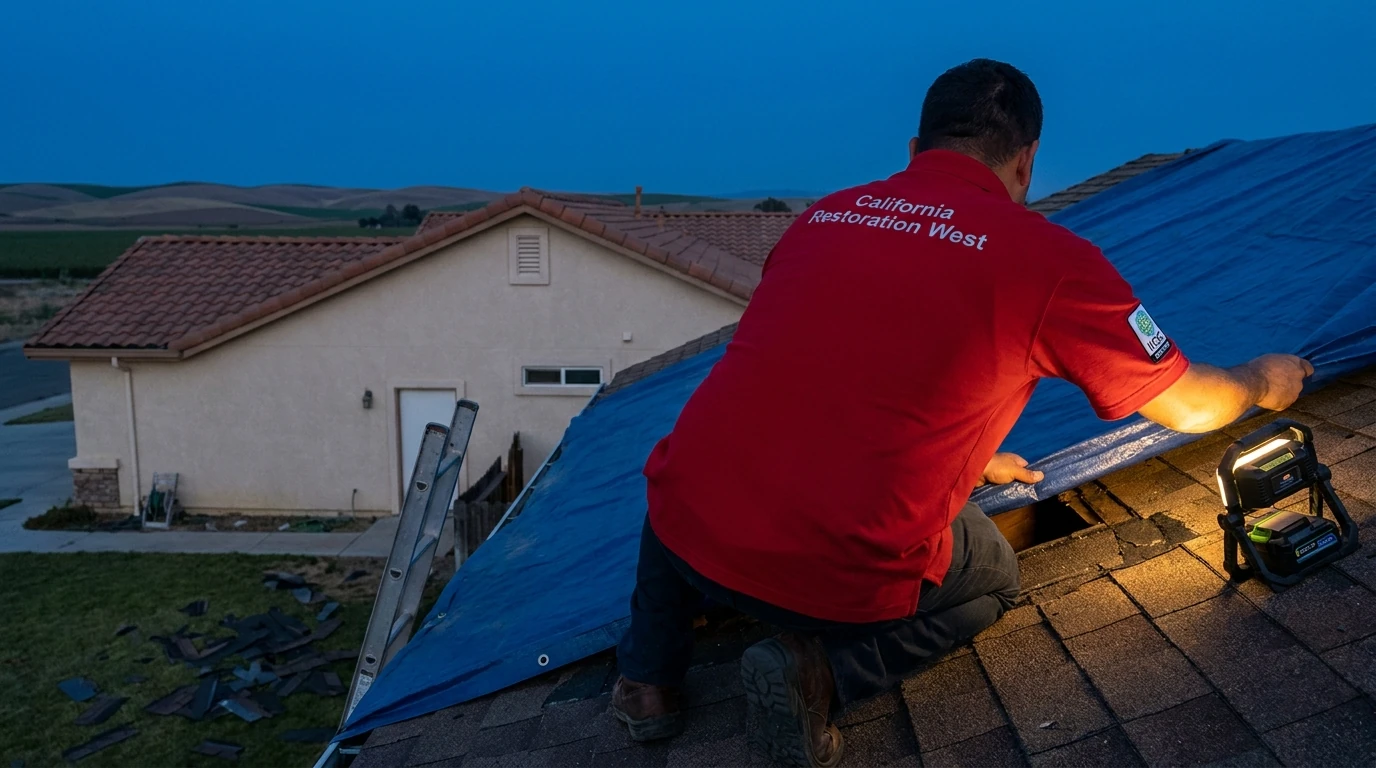
Storm and wind damage restoration covers the full sequence from emergency stabilization to final repair, not just cleanup. That means tarping a damaged roof section or boarding a blown-out window first, then assessing and drying any water intrusion, then handling structural repairs like roofing, siding, fencing, or framing.
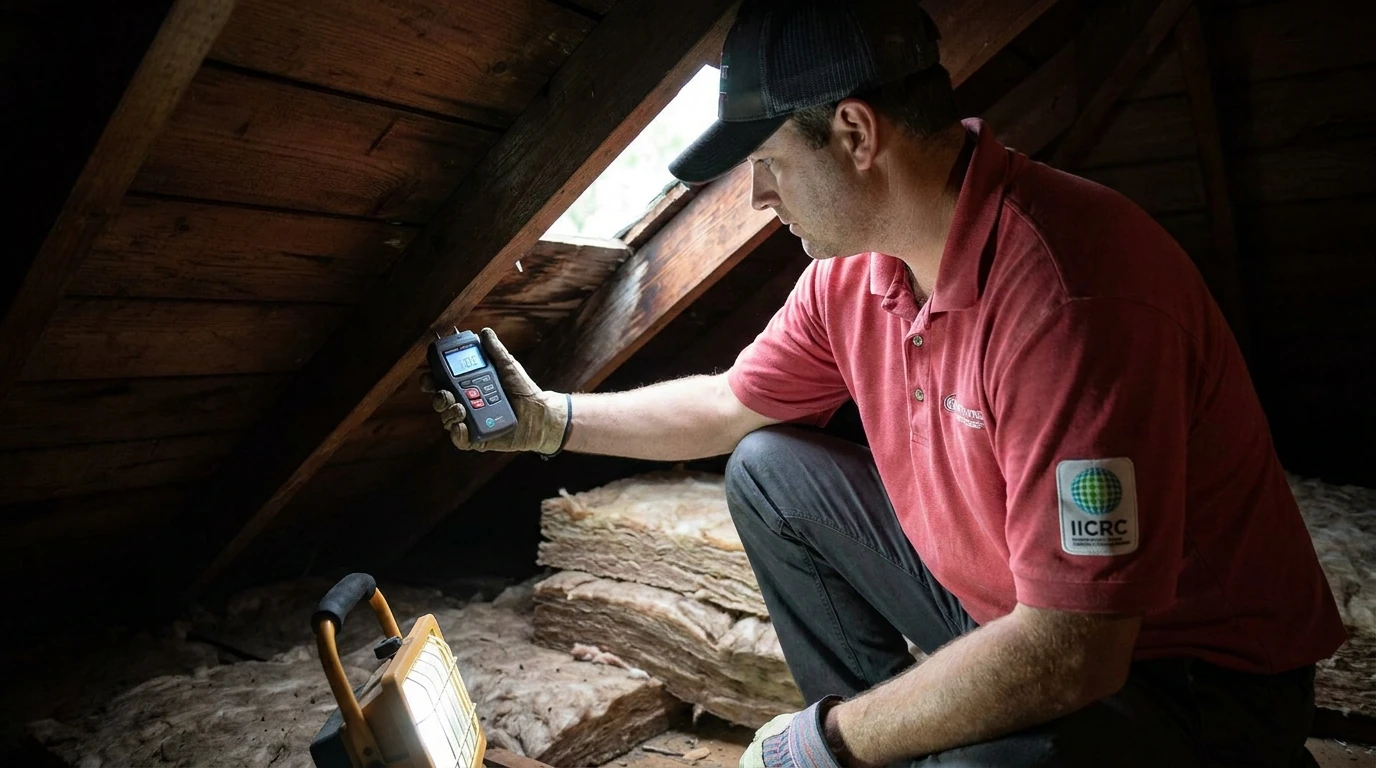
A typical scope after a Camarillo wind event includes a roof or window tarp set within the same visit, moisture readings taken on affected drywall and insulation, extraction and drying equipment placed if rain got in before the tarp went up, and a written scope of repairs for the insurance adjuster. Ventura County’s wind events are usually dry (Santa Ana conditions), so a lot of jobs are structural only, no water. But when a wind event arrives with or ahead of a Pacific storm front, the two damages compound and the drying work matters as much as the roofing repair.
How Fast Does Wind and Storm Damage Need to Be Addressed?
Storm damage needs a temporary stabilization (tarp or board-up) within hours, not days, because an open roof or broken window is an active entry point for weather, pests, and theft. Most insurance policies also require the policyholder to take reasonable steps to prevent further damage, which means a delayed tarp can affect what the carrier pays for secondary damage.
If water did get in before the opening was covered, drying needs to start within 24 to 48 hours. That’s the window most drying standards, including the IICRC S500 standard for water damage restoration, use as the threshold before unaffected building materials start supporting mold growth. A wet attic or wall cavity left closed up after a windstorm is exactly the kind of hidden moisture pocket that turns into a mold call six weeks later.
What Should I Watch Out For With Wind Damage Claims?
The most common mistake after a wind event is treating it as a simple repair instead of an insurance claim with a documentation requirement. Photograph the damage from multiple angles before anything is moved or tarped, keep the damaged materials (a piece of shingle, a section of fence) if the adjuster asks for them, and get a written, itemized scope before work starts rather than a verbal estimate.
A second mistake is assuming all wind damage is covered the same way. Most homeowners and commercial property policies cover sudden, wind-driven damage like a tree limb through a roof or shingles torn off by gusts. Damage from long-term wear, like a roof that was already failing before the storm, is often excluded or reduced under a depreciation clause. Our storm damage insurance claim checklist walks through what to document before the adjuster walks the property, and it’s worth doing before you call anyone for repairs.
A third issue specific to this region: flying debris and downed branches during Santa Ana events can crack windows or puncture siding without an obvious water intrusion. Don’t assume “no visible leak” means no moisture problem. A moisture meter reading on the interior wall cavity near any new crack or gap is the only way to confirm the building envelope is actually dry.
Who Should I Call for Storm and Wind Damage Restoration in Camarillo?
For storm and wind damage in Camarillo, call a restoration company that handles both the emergency stabilization and the water mitigation in one visit, since the two are connected more often than not. California Restoration West is an IICRC Certified Firm serving Camarillo and the rest of Ventura County, and responds 24/7 for tarping, board-up, and any drying work a wind event brings with it.
A roofer alone can replace shingles, but if rain got into the attic or a wall cavity before the repair, that moisture needs to be measured and dried to the IICRC S500 standard, not just painted over. Getting one crew to handle stabilization, drying, and the insurance documentation keeps the claim moving and avoids a second mold remediation call later. If the damage is purely cosmetic exterior, siding or fence repair with no intrusion, a general contractor can usually handle it directly.
Storm damage rarely waits for a convenient time, and in Ventura County the gap between a wind event and the next rain system can be short. Getting the roof or window stabilized the same day, and getting any wet materials dried before mold has a chance to start, is what keeps a wind claim from turning into a bigger repair.
About California Restoration West
California Restoration West is an IICRC Certified Firm serving Ventura, Camarillo, Oxnard, Thousand Oaks, and the surrounding Ventura County area, with technicians holding IICRC WRT, AMRT, and ASD certifications. The company operates 24/7 and handles water damage restoration, storm damage restoration, mold remediation, and contents restoration across the region. Licensed and insured, founded in 2025.
Call California Restoration West at (805) 290-7292 to schedule a storm damage assessment.