TL;DR: Water damage restoration is the complete process of returning a water-damaged property to its pre-loss condition. It covers three phases: emergency mitigation (stopping the damage), structural drying (removing moisture from materials), and restoration (repairing or replacing what was damaged). A certified crew handles all three, usually under a single insurance claim.
You just found standing water in your home, or your adjuster is asking for a “scope of restoration work” and you’re not sure what that even means. Water damage restoration is the technical term for the entire process a certified company uses to bring your property back to normal after water intrudes. It’s not just mopping up the floor. It covers everything from the first emergency call through the final coat of paint.
What does water damage restoration actually include?
Water damage restoration includes four core phases: emergency response, water extraction, structural drying, and final repairs. Each phase is distinct, and skipping or rushing any one of them is how secondary damage like mold starts.
Here’s what each phase looks like in practice:
- Emergency response. A certified crew arrives, assesses the source of water, and stops the intrusion if it’s still active (or coordinates with a plumber if the pipe is still flowing). They document everything for your insurance claim.
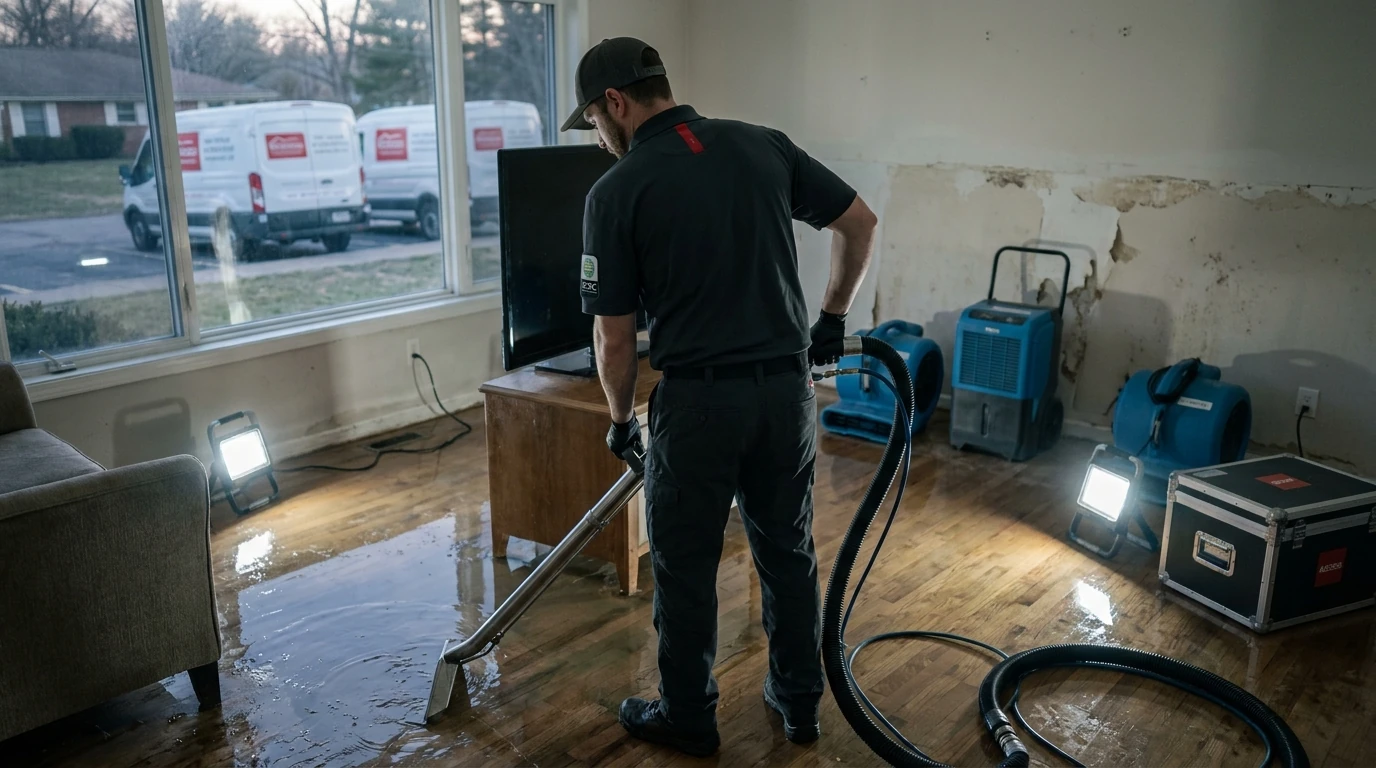
- Water extraction. Truck-mounted or portable extractors pull standing water from floors, carpets, and subfloors. This step is measured in gallons, not minutes.
- Structural drying. This is the phase most homeowners underestimate. Industrial LGR (low-grain refrigerant) dehumidifiers and high-velocity air movers run continuously, often for 3 to 5 days, to drive moisture out of drywall, framing, and flooring. Technicians take daily moisture readings with a calibrated moisture meter to verify drying progress against the IICRC S500 standard, the industry’s governing document for water damage response.
- Restoration and repairs. Once materials are dry, the rebuild begins: replacing drywall, reinstalling flooring, repainting, and restoring any contents that were affected. This phase is what turns a gutted, dried shell back into a livable home.
What is the difference between water mitigation and water restoration?
Mitigation stops the damage from getting worse. Restoration brings the property back to its pre-loss condition. They are sequential, not interchangeable, and most insurance policies cover both under a single claim.
Think of it this way: mitigation is the emergency room visit, restoration is the recovery. A mitigation crew extracts water, sets drying equipment, and installs containment to prevent mold from taking hold. Once the structure is dry and stabilized, the restoration phase begins. Some companies handle both under one contract; others hand off between a mitigation crew and a general contractor. Knowing which model your company uses matters, because a handoff creates gaps in documentation that can complicate your insurance claim.
The term “remediation” is sometimes used interchangeably with restoration, but it more precisely refers to removing a specific contaminant, like mold. If a water loss is left too long and mold grows, you may need both water damage restoration and mold remediation as separate scopes of work.
What equipment do water damage restoration companies use?
A professional water damage restoration crew arrives with extraction equipment, drying equipment, and monitoring tools. The specific equipment mix depends on the category and class of the water loss.
Here’s what you’ll typically see on a job:
- Truck-mounted extractors or portable extraction units: Pull standing water fast. Truck mounts move more volume; portables reach areas the hose can’t.
- LGR dehumidifiers: Low-grain refrigerant dehumidifiers pull moisture from the air more efficiently than standard units. A single commercial LGR can remove 80 to 150 pints of water per day from the air in a contained space.
- High-velocity air movers: These are not household fans. They direct high-CFM airflow across wet surfaces to accelerate evaporation. A typical room may need 4 to 8 air movers running simultaneously.
- Moisture meters and thermal imaging cameras: Technicians use pin-type and pinless moisture meters to track readings in walls, floors, and ceilings daily. Thermal imaging identifies wet areas behind finished surfaces without destructive testing.
- HEPA air scrubbers: Used when demolition creates airborne particles, or when mold is suspected alongside the water damage.
- Desiccant dehumidifiers: For extreme losses or cold environments where LGR units are less effective.
The equipment staging is not arbitrary. The IICRC S500 defines drying goals by material type and ambient conditions. A certified technician calculates the drying system based on the cubic footage of the affected space, the class of water damage, and the materials involved.
How does the water category affect the restoration process?
The water’s contamination level determines how aggressively the crew must work and whether materials can be dried in place or must be removed. There are three categories.
- Category 1 (clean water): Comes from a sanitary source, like a supply line or rain intrusion through a clean opening. Materials can often be dried in place if addressed quickly.
- Category 2 (gray water): Contains contaminants, like water from a washing machine overflow, dishwasher, or toilet with only urine. Porous materials in direct contact often need to be removed rather than dried.
- Category 3 (black water): Sewage, rising floodwater, or any water that has sat long enough to grow bacteria. All porous materials in contact must be removed. Full PPE is required for the crew.
Category can change over time. Category 1 water that sits for 48 to 72 hours in a warm environment can degrade to Category 2 or 3 as bacteria multiply. This is one of the main reasons fast response matters, and why the first 24 hours after a water loss are so critical. For a step-by-step breakdown of what to do immediately after water damage, see What To Do in the First 24 Hours After Water Damage.
What does water damage restoration cost, and will insurance cover it?
Most homeowners’ policies cover sudden and accidental water damage, including the full cost of mitigation and restoration, minus your deductible. Gradual leaks and flood events are typically excluded.
The cost of water damage restoration in California varies widely based on the size of the loss, the water category, and the materials affected. A small clean-water loss in a single bathroom might run $1,500 to $3,500. A Category 2 loss affecting multiple rooms, with flooring and drywall removal, can reach $8,000 to $20,000 or more. A detailed breakdown of California-specific pricing is available in the Water Damage Restoration Cost in Ventura County guide.
For insurance purposes, the restoration company documents the loss with moisture readings, photos, and a written scope before work begins. That documentation is what protects your claim. A company that starts tearing out drywall before documenting the moisture levels leaves you without the evidence your adjuster needs.
What should you do right now if you have water damage?
If water is still entering the property, stop the source first: shut off the main water supply or call your utility. Then call a certified restoration company. The longer water sits, the more categories change, the more materials absorb moisture, and the higher the cost of restoration.
For a water cleanup or full water damage restoration assessment, California Restoration West serves Ventura, Oxnard, Camarillo, Thousand Oaks, and surrounding Ventura County communities around the clock. Their IICRC-certified technicians (WRT, ASD) document every moisture reading and work directly with your insurance carrier from the first call through the final repair.
Schedule a moisture assessment or call (805) 290-7292 to reach their team.
About California Restoration West
California Restoration West is an IICRC Certified Firm serving Ventura, CA and surrounding Ventura County communities since 2025. The company holds IICRC certifications in Water Damage Restoration (WRT), Applied Structural Drying (ASD), and Applied Microbial Remediation (AMRT), and is licensed, insured, and available 24/7. Their services include water damage restoration, water cleanup, mold remediation, storm damage restoration, contents restoration, and crawl space encapsulation.
Video Transcript
Found water in your home? Water damage restoration is the full process of getting your property back to normal, not just mopping up the floor. The process has four phases: emergency response, water extraction, structural drying, and final repairs. Skipping any phase is how mold starts. First, a certified crew stops the water source, assesses the damage, and documents everything your insurance company will need. Next, powerful extractors pull standing water from floors, carpets, and subfloors. We measure this step in gallons, not minutes. Then comes structural drying, the phase most homeowners underestimate. Industrial dehumidifiers and air movers run for three to five days straight. Technicians take daily moisture readings in walls and floors to meet the IICRC S500 standard, the industry’s benchmark for safe, complete drying. Mitigation stops damage from getting worse. Restoration brings your home back. They’re sequential, and most insurance policies cover both under one claim. The water’s contamination level matters too. Clean water from a pipe, gray water from an appliance, or black water from sewage each require a different response. Once everything is dry, the rebuild begins, new drywall, flooring, and fresh paint. Your home goes from a gutted shell back to livable. Don’t wait, water damage gets worse every hour. Call California Restoration West at (805) 290-7292 for a free estimate today.