For mold remediation in Ventura, CA, call California Restoration West at (805) 290-7292. The company is IICRC-certified in mold remediation (AMRT), water damage restoration (WRT), and structural drying (ASD), runs a 24/7 emergency line, and is licensed and insured to work in Ventura County homes and businesses.
If you just pulled up a section of baseboard in a Midtown Ventura bungalow and found black-green staining, or the marine layer off the coast near Pierpont has kept a crawl space damp for weeks, you need a mold remediation crew, not a general handyman. Here’s how to figure out who to call and what happens after you dial.
When Should You Call a Mold Remediation Company Instead of a Plumber?
Call a mold remediation company as soon as you see visible growth, smell a persistent musty odor, or find staining after a leak has gone unaddressed for more than 48 hours. Call a plumber or, if it’s a main-line issue, Ventura Water first if water is still actively flowing from a fixture, slab leak, or supply line.
The reason for the split is simple: a plumber stops the water, a mold remediation team handles what the water left behind. Older housing stock along Ventura Avenue and in Midtown often runs galvanized or copper supply lines that develop slow leaks under slab, and those slow leaks are exactly what turns a damp subfloor into a mold colony. If you’re not sure which situation you’re in, a reputable remediation company will tell you honestly on the phone whether you need a plumber first.
One exception: if you smell gas, see exposed wiring, or the area involves standing water near an electrical panel, call 911 or your utility company before anyone else.
What Happens When You Call for Mold Remediation?
What happens first is a short phone intake where the company asks what you’re seeing, where it is, and how long it’s been there, then schedules an on-site assessment. Have the approximate square footage affected, any recent leak or flood history, and your homeowners insurance policy number ready before the crew arrives.
On-site, a technician typically:
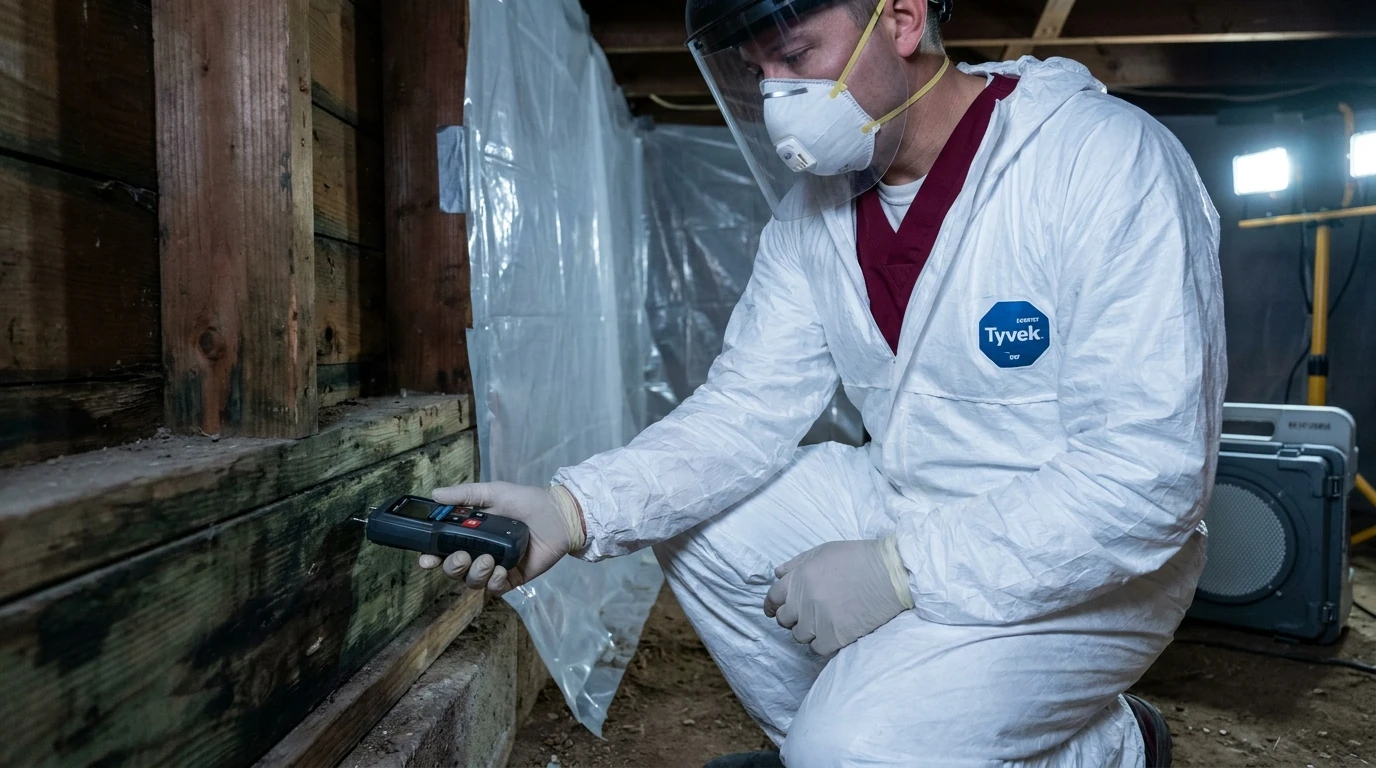
- Inspects visible growth and checks moisture content in surrounding drywall, subfloor, or framing with a moisture meter
- Identifies the moisture source, since remediation without fixing the source just means the mold comes back
- Sets containment with poly sheeting and negative air pressure if the affected area is more than roughly 10 square feet, per IICRC S520 guidance
- Removes contaminated porous material (drywall, insulation, sometimes subflooring) that can’t be cleaned
- HEPA-vacuums and cleans remaining surfaces, then runs air scrubbers to capture airborne spores
- Recommends post-remediation verification testing before the containment comes down
A written scope of work should come before any of that starts, not after.
How Do You Know If It’s a Real Mold Problem or Just Surface Staining?
Surface staining without a musty odor, texture, or recent moisture event is often mildew or dirt, while true mold growth usually has a fuzzy or slightly raised texture and a persistent damp smell. The EPA notes that visible mold and a musty odor are both reason enough to investigate further, and lab testing isn’t required to justify remediation if growth is visible.
If you’re not sure which you’re looking at, our post on black mold vs regular mold walks through the visual differences, and how to test for mold covers when a DIY kit is enough versus when you need an air sample pulled by a professional. Homes near Ventura Harbor and other low-lying areas tend to run higher ambient humidity, which means mold can establish itself even without an obvious leak, so a musty smell alone in those areas is worth a look.
What Should You Do Before Help Arrives?
Before anyone shows up, close off the affected room, turn off the HVAC system so spores don’t circulate through the ducts, and avoid scrubbing the area with bleach. Bleach doesn’t penetrate porous materials like drywall or wood the way it needs to, and disturbing mold without containment can spread spores into unaffected rooms.
Photograph the area for your insurance file before you touch anything, and if the mold followed a recent leak, note the date the leak occurred. Whether the remediation gets covered often depends on whether the moisture source was sudden and accidental (a burst pipe) versus gradual (a slow roof leak you didn’t catch), so that timeline matters. If the mold traces back to a damp crawl space rather than a single leak, ask about crawl space encapsulation as a permanent fix rather than repeated remediation visits.
Mold that keeps returning after cleaning almost always means the moisture source was never fixed. Getting a written scope and a moisture assessment up front saves a second call a few months later.
About California Restoration West
California Restoration West is an IICRC-certified restoration company (AMRT mold remediation, WRT water damage, ASD structural drying) serving Ventura and Ventura County since 2025. The company is licensed and insured, and its crews handle mold remediation, water damage restoration, water cleanup, crawl space encapsulation, contents restoration and storage, odor removal, and storm damage restoration across the region.