
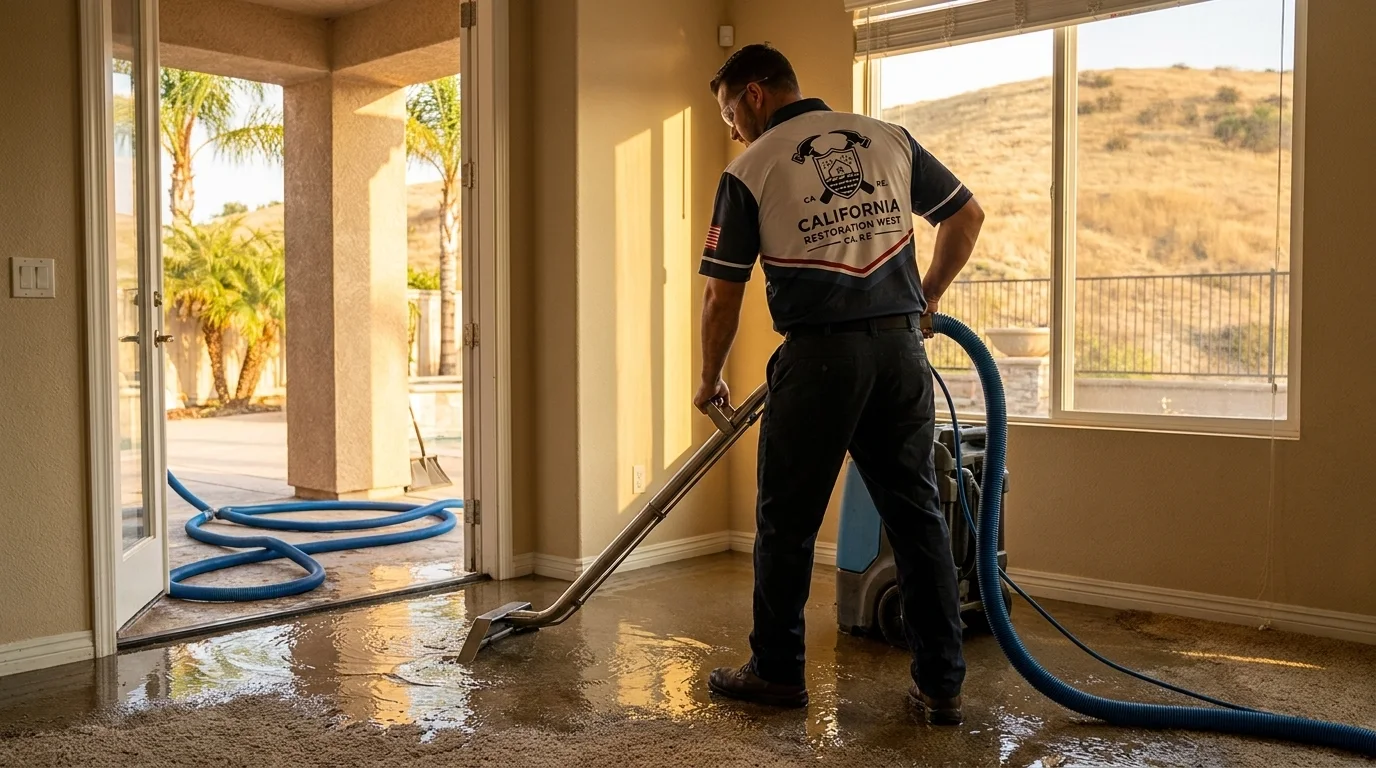
24/7 Emergency Flood Damage Restoration in Ventura
24/7 emergency flood damage restoration in Ventura and surrounding areas. IICRC-certified, insurance billing accepted. Call (805) 290-7292.
Flood damage in Ventura? We answer 24/7. Floodwater moves fast through a home, under baseboards, into wall cavities, beneath flooring, and it doesn’t stop once the rain does. If water has entered through a storm surge, a burst irrigation line uphill, or runoff from the Ventura River or a nearby arroyo, the clock on structural damage and microbial growth starts immediately. The longer saturated materials sit, the more of the home has to come out instead of dry out.
What flood damage restoration actually involves
Flood damage restoration is different from a contained plumbing leak because the water source is often unknown, and the water itself is frequently contaminated. Floodwater that has touched soil, sewage lines, or roadway runoff is treated as Category 3 (black water) under IICRC guidelines, which changes what can be dried in place versus what has to be removed and discarded. A flood response typically involves pumping or extracting standing water, flood-cutting drywall above the waterline, pulling baseboards and wet insulation, setting up negative air or containment where contamination is suspected, and running structural drying equipment for days rather than hours. Moisture readings in studs, subfloor, and slab are tracked daily against a drying goal, not just “until it feels dry.”
Our process
- Contamination and safety assessment. Before any equipment goes in, we identify the water category (clean, gray, or black) and check for electrical hazards, slip risks, and structural concerns from standing water.
- Extraction. Truck-mounted extractors and submersible pumps remove bulk water from floors, carpet, and low points like crawlspaces, so drying equipment isn’t fighting against a wet slab.
- Controlled demolition of saturated materials. Drywall is flood-cut several inches above the waterline, wet insulation is removed, and baseboards are pulled to expose wall cavities that would otherwise trap moisture and start to smell.
- Structural drying and daily moisture monitoring. Axial fans, air movers, and LGR dehumidifiers are placed per a drying plan, and moisture readings in affected studs, subfloor, and slab are logged against a documented drying standard, not eyeballed.
- Antimicrobial treatment and containment. Where the water was Category 2 or 3, affected surfaces are treated with an antimicrobial and contained to prevent cross-contamination to unaffected rooms during the dry-out.
What separates a good flood damage response from a bad one
The most common mistake is drying over contaminated material instead of removing it. Running fans on Category 3 water that’s already soaked into drywall or carpet pad doesn’t disinfect it, it just dries contamination in place. A good response also checks moisture inside wall cavities and under flooring, not just surface dampness, since drywall can test dry to the touch while the stud behind it is still saturated. Insurance adjusters look for daily moisture logs, photos of the flood-cut line, and documentation of the water category determination, because that’s what justifies the scope of demolition versus drying. Skipping that documentation is one of the fastest ways a claim gets disputed later.
What does flood damage restoration cost?
Costs depend on the water category, how far the water traveled through the structure, and whether flooring, drywall, or insulation have to be replaced rather than dried. Every loss is different, which is why California Restoration West provides a written scope of work before any repair or demolition begins. Homeowners insurance typically covers sudden, accidental water intrusion (like a pipe burst) but excludes rising floodwater from storms or overland flow unless you carry separate flood insurance, so it’s worth confirming your policy type early.
| Scenario | Typical range |
|---|---|
| Single room, clean water, no demolition | $1,200 - $3,500 |
| Category 2 water with partial drywall removal | $2,800 - $6,500 |
| Category 3 (black water) flooding, one floor | $5,000 - $12,000 |
| Whole-home flood with flooring and drywall replacement | $12,000 - $30,000+ |
| Crawlspace or basement flood with contents affected | $3,500 - $9,000 |
Seasonal & regional considerations
Ventura’s rainy season runs roughly December through March, and atmospheric river storms can push several inches of rain in a short window, overwhelming storm drains in older neighborhoods and sending runoff downhill from the foothills. In years following wildfire activity in the surrounding hills, burn scars shed water and debris faster than vegetated slopes, which has led to flash flooding and mudflow intrusion in homes well below the burn area. Homes on slab foundations near low-lying streets tend to see water enter at door thresholds and work laterally, while older crawlspace homes closer to the river can take on water from below, which changes where moisture hides and how long drying takes.
Service area
We respond to flood damage throughout Ventura and nearby communities including Oxnard, Camarillo, Santa Paula, Ojai, and Thousand Oaks.
If water is actively standing in your home or has already receded and left soaked flooring and drywall behind, call (805) 290-7292 to schedule your flood damage assessment before drying windows close and secondary damage sets in.
Frequently Asked Questions
Does homeowners insurance cover flood damage restoration?
How do you determine if floodwater is contaminated before starting cleanup?
How long does flood-affected drywall and flooring need to dry?
Can flood-damaged flooring be saved, or does it always need to be replaced?
What should I do with furniture and belongings while flood cleanup is underway?
Looking for the best flood damage restoration company in Ventura?
California Restoration West provides flood damage restoration in Ventura, CA and the surrounding area, and has served local property owners since 2025. Customers rate us 5.0 out of 5 stars across 9 Google reviews. We answer calls 24/7 — call (805) 290-7292 for immediate help.
Need Flood Damage Restoration now?
We respond 24/7 across Ventura and surrounding CA cities.
Related Coverage
- Our Restoration Services
- Contact California Restoration West
- Restoration Services in Camarillo
- Restoration Services in Carpinteria
- Restoration Services in Castaic
- Restoration Services in Fillmore
- Restoration Services in Hasley Canyon
- Restoration Services in Lake Sherwood
- Restoration Services in Mira Monte
- Restoration Services in Moorpark
- Restoration Services in Oak Park
- Restoration Services in Oak View
- Restoration Services in Ojai
- Restoration Services in Oxnard