
24/7 Emergency Sewage Cleanup and Sanitization in Ventura
24/7 emergency sewage cleanup and sanitization in Ventura and surrounding areas. IICRC-certified, insurance billing accepted. Call (805) 290-7292.
Raw sewage backing up through a floor drain or toilet in Ventura? Call (805) 290-7292 now, we answer 24/7. Sewage backups are classified as Category 3 water, meaning the water is carrying bacteria, viruses, and waste that can make a home unsafe within hours, not days. Whether the cause is a blocked sewer lateral, a failed septic tank, or a municipal line surcharge during a storm, the longer contaminated water sits against drywall, flooring, and cabinetry, the more material has to come out.
What sewage cleanup and sanitization actually involves
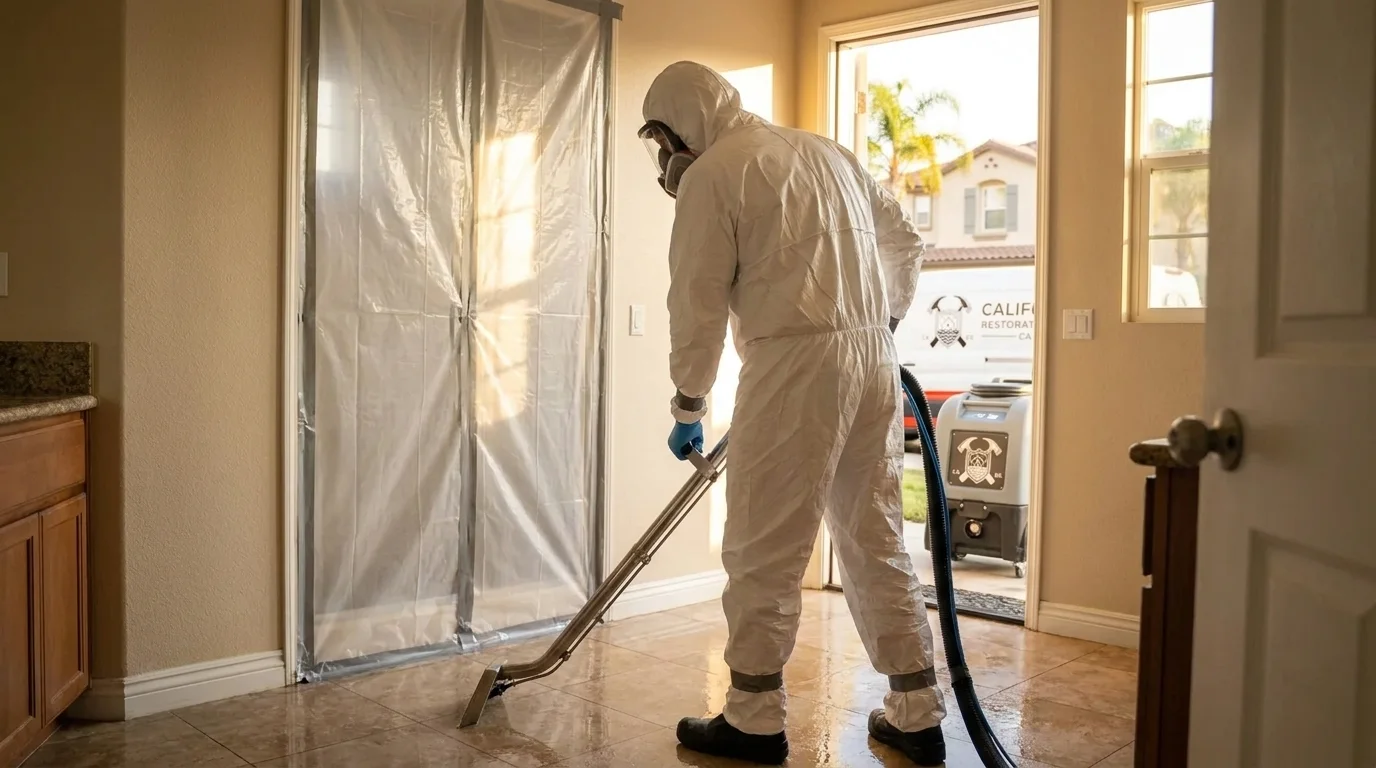
Sewage cleanup is not the same scope as a clean-water leak. Because the water carries pathogens such as E. coli and hepatitis A, every porous material it touches, carpet, carpet pad, baseboard, drywall below the waterline, insulation, is treated as contaminated and removed rather than dried in place. Crews work in full PPE (gloves, respirators, protective suits) under OSHA bloodborne pathogen guidelines, extract standing wastewater with trash pumps built for solids, and bag contaminated debris for proper disposal. Once the source is confirmed stopped, typically a plumber clears the line or the septic issue is addressed, the real work is sanitization: antimicrobial application, enzymatic treatment to break down organic waste, and HEPA air scrubbing to pull odor-causing particulates out of the air. A straightforward single-room backup is often extraction and demo in one day, with drying running several additional days; a whole-house event or crawlspace intrusion takes longer.
Our process
- PPE staging and containment. The affected area is sealed off from the rest of the home before anyone enters, limiting the spread of contaminated water and airborne particulates.
- Raw sewage extraction and contaminated material removal. Standing wastewater is pumped out first, then saturated porous materials, carpet, pad, baseboard, drywall up to a flood-cut line, are removed and bagged, not dried.
- Antimicrobial and enzymatic treatment. Remaining surfaces are treated with hospital-grade antimicrobial product and enzymatic cleaners that break down residual organic waste rather than just masking odor.
- Structural drying and moisture monitoring. Remaining structure is dried and monitored per IICRC S500 guidelines, with daily moisture readings until subfloor and framing return to a dry standard.
- Clearance check before reconstruction. Odor, surface, and moisture checks confirm the space is sanitary before drywall, flooring, or cabinetry go back in.
What separates a good sewage cleanup response from a bad one
The most common mistake is treating a sewage event like a regular water loss: drying carpet or drywall that should have been cut out and discarded. Carpet and pad that have absorbed blackwater cannot be sanitized to a safe standard and should always be removed, not dried. A second common miss is not pulling toe kicks and baseboards to check for wicking behind cabinetry, which leaves hidden contamination and odor that resurfaces weeks later. Crews also need to identify the actual source, a sewer line blockage versus a failing septic tank versus municipal backup, because that determines whether a plumber needs to clear the line before cleanup can safely proceed, and it affects how the loss gets documented for insurance. Adjusters reviewing sewage claims generally want photos of the contamination level, a list of what was removed and why, and moisture logs showing the structure dried to standard, which is also the paperwork that protects a homeowner if mold or odor issues come up later.
What does sewage cleanup and sanitization cost?
Costs vary with how much contaminated material has to be removed, how far the water traveled (a single bathroom versus water that reached a finished basement), and whether a plumber or septic contractor is needed to address the source. California Restoration West provides a written scope before any work begins so there are no surprises once demolition starts. Homeowners insurance often covers sudden sewer backups, especially with backup/sump endorsement coverage, but gradual septic failures or lack of maintenance may be excluded, so it’s worth checking the policy language.
| Scenario | Typical range |
|---|---|
| Single bathroom, toilet backup, minimal spread | $1,500 - $3,500 |
| Backup affecting bathroom plus adjacent hallway or bedroom | $3,000 - $7,000 |
| Basement or crawlspace sewage intrusion | $5,000 - $12,000 |
| Whole-floor backup with cabinetry and flooring removal | $8,000 - $20,000+ |
| Septic overflow affecting multiple rooms | $6,000 - $15,000 |
Seasonal & regional considerations
Ventura’s older neighborhoods and surrounding unincorporated areas like Ojai and Oak View still rely on a mix of aging clay sewer laterals and private septic systems, both of which are more prone to tree root intrusion and backups during the heavy rain events that hit the county in winter. Storm surges can overwhelm municipal lines faster than many homeowners expect, pushing wastewater back up through the lowest drain in the house, often a basement floor drain or ground-floor bathroom.
Service area
California Restoration West responds to sewage backups and septic overflows across Ventura and the surrounding cities, including Oxnard, Camarillo, Santa Paula, Ojai, and Thousand Oaks.
If sewage has backed up into your home, stop using drains and toilets connected to the affected line and call (805) 290-7292 to begin sewage cleanup and sanitization before contamination spreads further into the structure.
Frequently Asked Questions
Does homeowners insurance cover sewage backup cleanup?
Is sewage backup considered Category 3 water damage, and why does that matter?
What items can't be saved after a sewage backup?
How do you prevent cross-contamination during sewage cleanup?
What's the difference between a sewer line backup and a septic overflow, and does the cleanup process differ?
Looking for the best sewage cleanup and sanitization company in Ventura?
California Restoration West provides sewage cleanup and sanitization in Ventura, CA and the surrounding area, and has served local property owners since 2025. Customers rate us 5.0 out of 5 stars across 9 Google reviews. We answer calls 24/7 — call (805) 290-7292 for immediate help.
Need Sewage Cleanup and Sanitization now?
We respond 24/7 across Ventura and surrounding CA cities.
Related Coverage
- Our Restoration Services
- Contact California Restoration West
- Restoration Services in Camarillo
- Restoration Services in Carpinteria
- Restoration Services in Castaic
- Restoration Services in Fillmore
- Restoration Services in Hasley Canyon
- Restoration Services in Lake Sherwood
- Restoration Services in Mira Monte
- Restoration Services in Moorpark
- Restoration Services in Oak Park
- Restoration Services in Oak View
- Restoration Services in Ojai
- Restoration Services in Oxnard