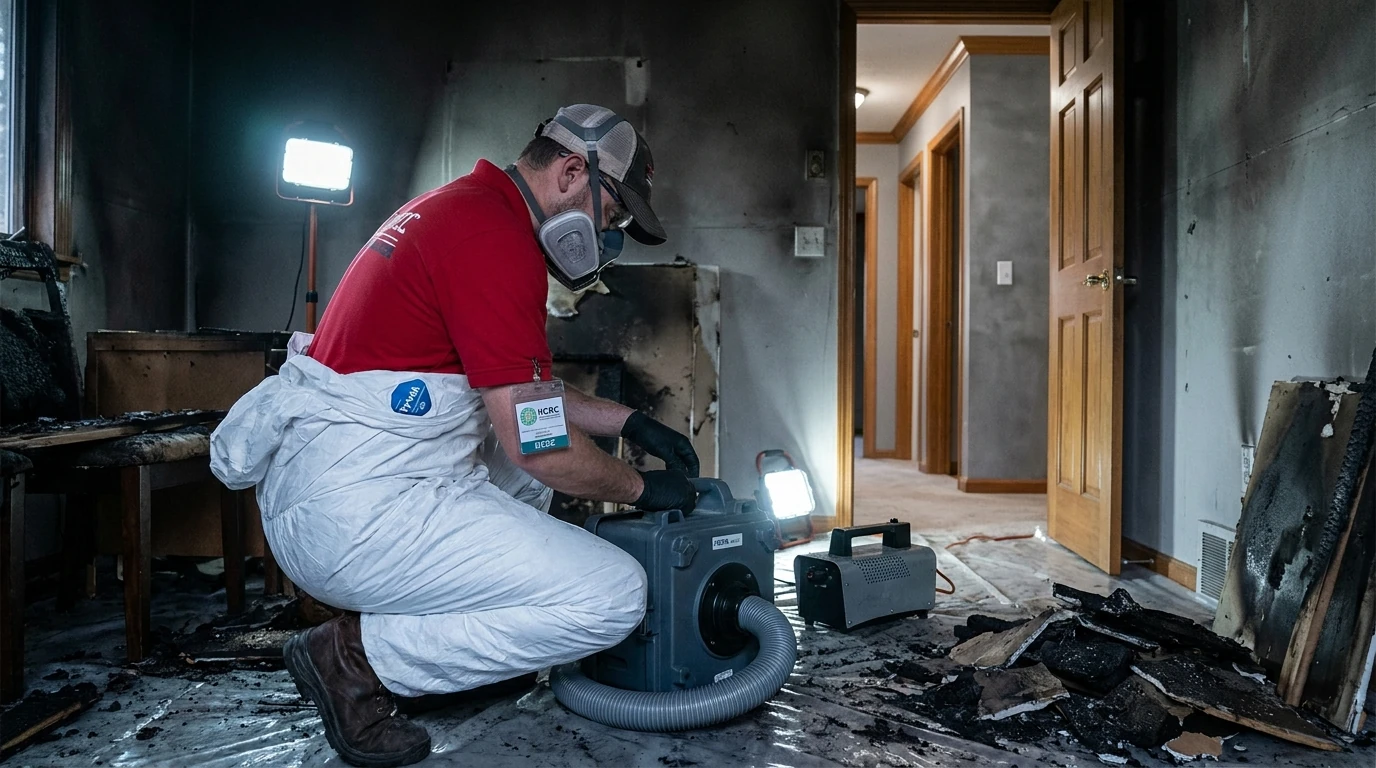
Fire damage restoration is the process of removing soot, smoke residue, and water (from either the fire or the hose lines used to fight it), then repairing or rebuilding whatever the flames and heat destroyed. It typically runs through five stages: a safety assessment, securing the structure, water and debris removal, deep cleaning of soot and smoke odor from every surface, and finally reconstruction of damaged framing, drywall, flooring, or roofing. The timeline and cost depend heavily on how much of the home burned versus how much was affected by smoke and water alone, since smoke can travel through HVAC ducts and settle in rooms far from the fire itself.
What a Fire Actually Leaves Behind
Most homeowners picture charred wood and melted plastic, but the damage that causes the most long-term trouble is often invisible at first glance. Soot is acidic and will continue etching into metal, grout, and painted surfaces for days after the fire is out if it isn’t cleaned. Smoke odor isn’t just in the air, it’s embedded in drywall pores, fabric fibers, and even inside wall cavities where insulation absorbed it. And then there’s water: fire crews use thousands of gallons to knock down a blaze, and that water soaks into subfloors, baseboards, and ceiling cavities, creating a secondary water damage problem that needs its own drying process.
In Ventura, where older homes near downtown and the Avenue district often have original plaster walls and lath construction, smoke and water can get trapped behind surfaces that look intact from the inside. Newer construction with drywall and modern insulation tends to show damage more visibly but can trap moisture inside wall cavities just as easily.
Immediate Steps in the First 24 to 48 Hours
- Confirm it’s safe to re-enter. Wait for the fire department’s clearance before going back inside. Structural damage from heat can weaken floors, ceilings, and roof framing in ways that aren’t obvious.
- Contact your insurance company right away. Start the claim process immediately, even if you haven’t assessed the full damage yet. Ask what documentation they require and whether they have a preferred restoration vendor list.
- Photograph everything before touching anything. Document rooms, damaged belongings, and structural damage from multiple angles. This record matters more than people expect once the claims adjuster gets involved.
- Arrange for board-up or tarping if there are openings. Broken windows, a compromised roof, or a burned-through wall need to be covered to keep weather and intruders out while the claim is processed.
- Shut off utilities if the fire department hasn’t already. Gas lines and electrical systems exposed to fire can be compromised even if they look fine.
What Not to Do After a Fire
- Don’t turn on the HVAC system. If smoke reached the ductwork, running the system spreads soot and odor into untouched rooms.
- Don’t attempt to wash soot off walls or fabric with water. Soot is oil-based in many fires and water can smear it deeper into the material, making it harder to remove later.
- Don’t eat food that was in the kitchen during the fire, even canned goods. Heat can compromise seals and packaging in ways that aren’t visible.
- Don’t throw away damaged items before your insurance adjuster has seen them or you’ve photographed them thoroughly. Even items that look like a total loss may factor into your claim’s valuation.
- Don’t assume a room with no visible flame damage is unaffected. Smoke odor and fine soot particulates travel well beyond the room that burned.
When to Call a Professional
Small, contained incidents like a scorched pan on the stove might be a cleanup job you can tackle yourself with some ventilation and degreasing cleaner. But once smoke has traveled through multiple rooms, water from firefighting has pooled on flooring, or any part of the structure is charred, it’s worth calling in a fire damage restoration company before you start cleaning. Acting on your own with the wrong cleaning products can set soot stains permanently or push moisture into wall cavities where mold has a head start. A restoration crew with smoke damage restoration experience will also know how to test for hidden pockets of residual odor using thermal fogging or ozone treatment, something that’s difficult to replicate with store-bought products.
This matters particularly in a county where Santa Ana wind events and dry chaparral terrain have led to significant wildfires in recent years, including the 2017 Thomas Fire that affected large areas of Ventura. Even homes that weren’t directly in the fire’s path sometimes deal with ash infiltration and smoke odor carried on the wind, which behaves differently than smoke from a contained interior fire and often settles into HVAC filters, attic spaces, and exterior stucco.
The Longer Recovery Process
Once the immediate hazards are addressed, restoration moves into a longer sequence that can take anywhere from a few weeks to several months depending on scope:
Assessment and documentation. A restoration company walks the property room by room, noting which materials can be cleaned and which need to be removed and replaced. This becomes the basis for the insurance scope of work.
Water extraction and structural drying. Any water used to fight the fire gets extracted, and affected materials are dried using the same equipment and monitoring approach used in standard water damage jobs, following drying benchmarks similar to the IICRC S500 standard for structural drying.
Soot and residue removal. Walls, ceilings, HVAC ducts, and contents go through a cleaning process matched to the type of soot (protein-based residue from a kitchen fire cleans differently than synthetic residue from burned furniture or electronics).
Odor neutralization. This is usually the step homeowners underestimate. Odor removal often requires sealing treated surfaces and sometimes thermal fogging or hydroxyl treatment to break down odor molecules trapped in porous materials, not just masking them.
Reconstruction. Framing, drywall, flooring, cabinetry, or roofing that was too damaged to salvage gets rebuilt. This phase is where the claim often gets amended as contractors uncover additional damage once walls are opened up.
If you’re in the middle of this process in Ventura or the surrounding area, California Restoration West can walk the property with you, document the damage for your insurance claim, and outline what can realistically be restored versus rebuilt. Call (805) 290-7292 to talk through what you’re dealing with before you make any decisions about cleanup.