24/7 Emergency Smoke Damage Restoration in Ventura
24/7 emergency smoke damage restoration in Ventura and surrounding areas. IICRC-certified, insurance billing accepted. Call (805) 290-7292.
Smoke damage emergency in Ventura? We answer 24/7. Smoke doesn’t stop at the edge of the burn. It rides heat and pressure differentials into wall cavities, HVAC ductwork, and furniture upholstery long after the fire is out, and the acids in soot residue keep etching metal, glass, and finishes for days if they’re not neutralized. A house that looks untouched after a nearby wildfire or a contained kitchen fire can still carry an odor that gets worse with humidity, because the particles haven’t been removed, just masked.
What smoke damage restoration actually involves
Smoke damage restoration is a different discipline from fire damage repair. There’s often no charring or structural loss, just a fine film of soot and an odor that has worked into porous materials: drywall, insulation, carpet padding, upholstery fibers, and HVAC ductwork. The work starts with identifying what type of smoke you’re dealing with. Protein soot from a kitchen or grease fire is nearly invisible, yellowish, and leaves a strong odor with very little visible residue. Synthetic soot from burning plastics, foam, or electronics is heavier, oily, and smears when touched. Wildfire smoke sits somewhere in between, carrying ash and fine particulate that infiltrates through attic vents, window gaps, and return air ducts even in homes miles from the fire line. Each type responds to different cleaning agents and requires a different sequence of work, which is why an accurate characterization up front matters more in smoke jobs than almost any other restoration category.
Our process
- Soot characterization. We identify whether the residue is protein-based, synthetic, wet, or dry smoke, since that determines the cleaning agents and whether a surface can be wiped clean or needs to be sealed and repainted.
- Source containment and ventilation control. HVAC systems are shut down or isolated to stop recirculating soot particles through the house, and affected rooms are contained to keep residue from spreading to unaffected areas during cleanup.
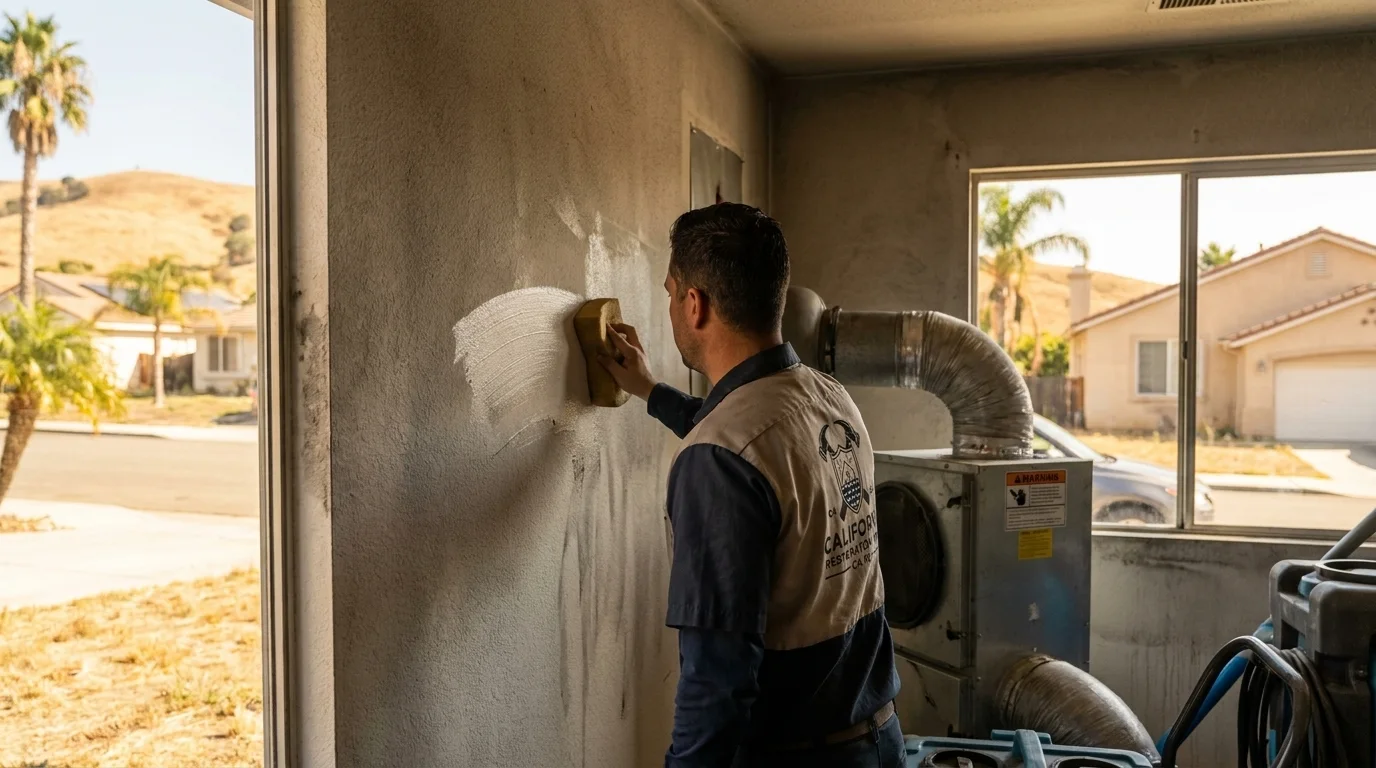
- Surface cleaning and content treatment. Hard surfaces are cleaned with soot-specific solvents matched to the residue type. Soft contents (upholstery, textiles, some electronics) may be pulled for off-site ultrasonic cleaning or specialty treatment rather than cleaned in place.
- Odor neutralization. Thermal fogging or hydroxyl/ozone treatment is used to counteract odor at the molecular level in affected cavities and materials, not just mask it. This step is timed carefully, since ozone treatment requires the space to be vacated during application.
- HVAC and duct verification. Ductwork is inspected and cleaned where smoke has traveled through the air handling system, since skipping this step is one of the most common reasons odor returns weeks after a job is “finished.”
What separates a good smoke damage response from a bad one
The most common mistake is treating smoke damage like a surface cleaning job: wipe the visible soot, run an air freshener, call it done. That approach leaves odor-causing particles embedded in drywall paper, insulation, and subflooring, where they off-gas again once humidity rises. A thorough response tests beyond the visible damage line, checking attic space and wall cavities near the source even when the surface looks clean. Insurance adjusters pay close attention to whether a contractor documented soot type and affected square footage before starting work, since that documentation is what supports the difference between a cleaning line item and a tear-out-and-replace line item. Skipping HVAC duct inspection, using an all-purpose cleaner on protein soot residue that needs a degreasing agent, or applying ozone treatment without clearing the home first are all signs of a rushed job that tends to resurface as a reopened claim.
What does smoke damage restoration cost?
Costs vary widely based on soot type, how far the smoke traveled through the structure, and whether contents need off-site cleaning versus in-place treatment. These are typical industry ranges, not a quote: every loss is different, and California Restoration West provides a written scope before any work begins. Homeowners insurance typically covers smoke damage restoration when the source is a covered peril, such as a kitchen fire or a qualifying wildfire event, though policy language and proximity requirements vary.
| Scenario | Typical range |
|---|---|
| Single room, light surface soot | $500 - $1,500 |
| Whole-house odor treatment (fogging/ozone) | $1,000 - $3,000 |
| Kitchen fire with protein soot cleanup | $2,000 - $5,000 |
| Wildfire smoke infiltration, no fire contact | $1,500 - $4,500 |
| HVAC duct cleaning after smoke event | $450 - $1,200 |
| Contents cleaning (upholstery, textiles, electronics) | $500 - $2,500+ |
Seasonal & regional considerations
Ventura County sits in a well-documented wildfire corridor, and offshore Santa Ana wind events can push smoke and ash from fires burning well outside city limits into homes along the coast and foothills. These events don’t require flame contact with a structure to cause real damage: fine ash settles into attic insulation and HVAC filters, and the odor can linger in homes that never saw a spark. Homeowners in hillside and canyon neighborhoods, where return air intakes and attic vents face prevailing wind patterns, tend to see heavier infiltration than homes in more sheltered pockets of the city.
Service area
We handle smoke damage restoration throughout Ventura and the surrounding communities, including homes affected by structure fires and by regional wildfire smoke events across the county.
If your home still smells like smoke days after the fire department left, or you’ve noticed a haze settling on surfaces after a nearby wildfire, don’t wait for it to fade on its own, because it usually doesn’t. Call (805) 290-7292 to begin smoke and soot removal and get an on-site assessment of how far the residue has traveled.
Frequently Asked Questions
Does homeowners insurance cover smoke damage restoration?
What's the difference between protein soot and synthetic soot, and why does it matter?
Can my house have smoke damage even if a wildfire never reached my property?
How do you know if smoke odor has only affected the surface or has gotten into the walls?
Do I need to leave the house during thermal fogging or ozone treatment?
Looking for the best smoke damage restoration company in Ventura?
California Restoration West provides smoke damage restoration in Ventura, CA and the surrounding area, and has served local property owners since 2025. Customers rate us 5.0 out of 5 stars across 9 Google reviews. We answer calls 24/7 — call (805) 290-7292 for immediate help.
Need Smoke Damage Restoration now?
We respond 24/7 across Ventura and surrounding CA cities.
Related Coverage
- Our Restoration Services
- Contact California Restoration West
- Restoration Services in Camarillo
- Restoration Services in Carpinteria
- Restoration Services in Castaic
- Restoration Services in Fillmore
- Restoration Services in Hasley Canyon
- Restoration Services in Lake Sherwood
- Restoration Services in Mira Monte
- Restoration Services in Moorpark
- Restoration Services in Oak Park
- Restoration Services in Oak View
- Restoration Services in Ojai
- Restoration Services in Oxnard
- The Fire Damage Restoration Process, Explained